Environmental
Estimated 30–35 MWh of annual clean energy, reducing reliance on unstable grid supply and backup fuels.
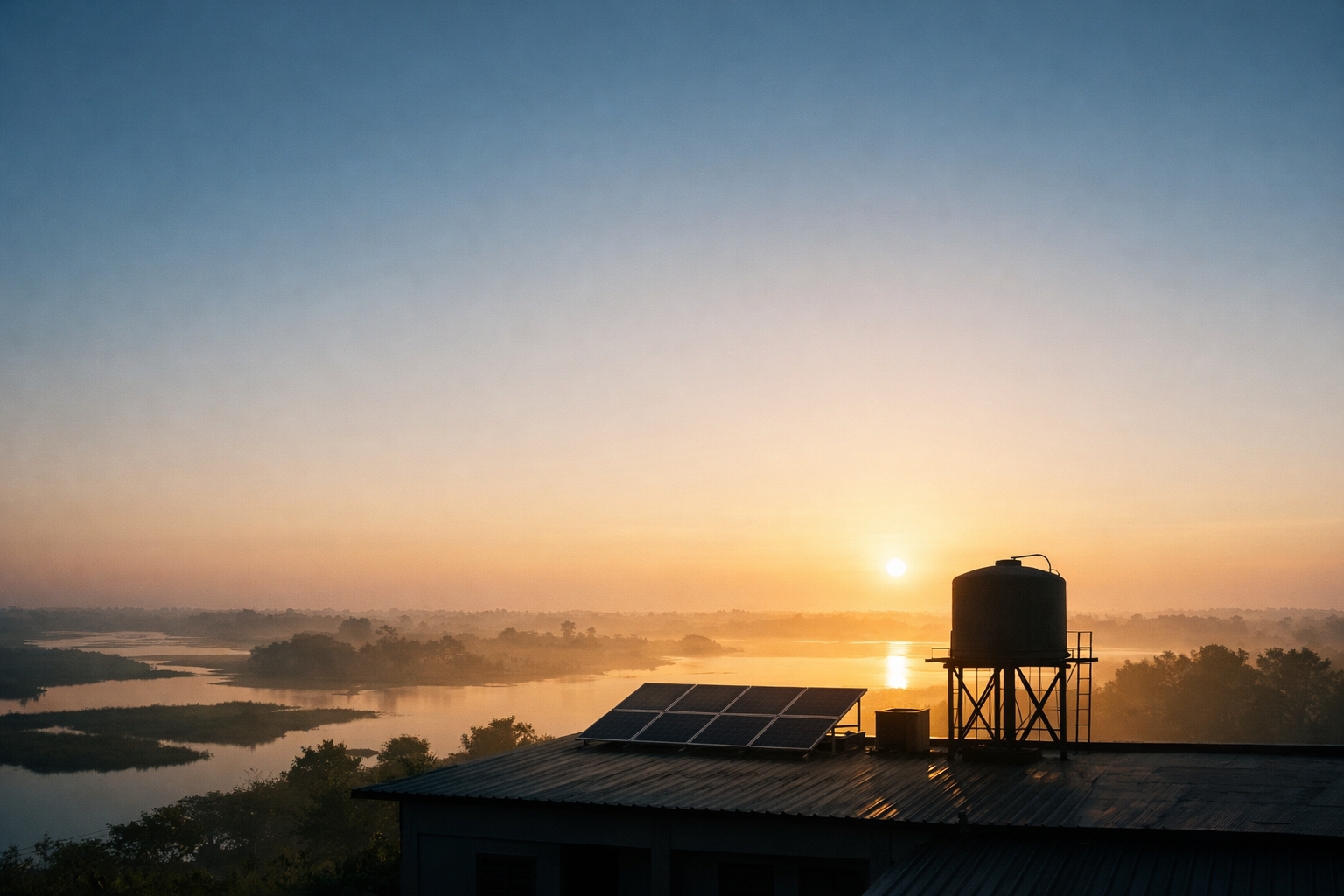
Solar-powered WASH facilities for six coastal schools in Rampal, Southern Bangladesh.
A targeted response to one practical failure: when power collapses, water systems stop. The proposed rooftop solar systems restore pumping reliability and safer learning conditions for 1,258 students.
01. Overview
Coastal southern Bangladesh remains highly exposed to salinity intrusion, fragile infrastructure, and unstable electricity supply. In Rampal Upazila of Bagerhat District, school water and sanitation systems have become unreliable not because infrastructure is entirely absent, but because electricity is unstable enough to leave water pumps non-functional.
Across six selected schools, children face daily water scarcity, unsafe sanitation conditions, and compromised hygiene. Toilets are often dry or dependent on manually carried pond water, safe drinking water is unavailable in most schools, and functional handwashing stations are virtually absent.
Installing decentralized rooftop solar photovoltaic systems to power water pumps and restore functional WASH facilities. This ensures uninterrupted electricity for water supply, protecting child health, dignity, and educational continuity.
02. Context
Limited privacy and lack of reliable water make it exceedingly difficult to manage menstrual hygiene with dignity, directly affecting attendance and comfort.
Student distribution across the six selected climate-vulnerable schools.
| Institution Name | Student Body |
|---|---|
| Borokathali Govt. Primary School | 320 |
| Aruadanga Govt. Primary School | 220 |
| Shikirdanga Govt. Primary School | 187 |
| Kalekharber Tremuhini Govt. Primary School | 156 |
| Bhojpatia Hazi Junab Ali Govt. Primary School | 197 |
| Talbunia Uttorpara Govt. Primary School | 178 |
| Total Beneficiaries | 1,258 |
03. ESG Architecture
Estimated 30–35 MWh of annual clean energy, reducing reliance on unstable grid supply and backup fuels.
Functional WASH access for 1,258 students, including more dignified menstrual hygiene conditions.
Restored access to safe water and more consistent handwashing, improving the school hygiene environment.
Transparent reporting, technical review, and active School WASH Committees support responsible delivery.
04. Technical Design
Each school receives a decentralized rooftop solar system sized between 3–5 kW depending on student population and water demand. The systems will power energy-efficient pumps connected to safe water sources and overhead storage tanks.
Solar PV panels, cyclone-resilient mounting, hybrid inverter with MPPT, energy-efficient pumps, and lightning protection.
Overhead storage tanks, upgraded handwashing stations, rehabilitated toilets, with generation dedicated to sanitation needs.
Operating Logic
Electricity outages prevent pumps from filling storage tanks, leaving sanitation systems dry.
Dedicated solar generation keeps pumping functional even during total grid failure.
Reliable water access improves hygiene, protects dignity, and minimizes learning disruption.
05. Timeline
Infrastructure audits, water demand analysis, structural feasibility, and community engagement.
Procurement, integration, WASH rehabilitation, safety setup, and stress testing.
Training for School WASH Committees, maintenance protocols, and performance monitoring.
06. Risk Management
Sustainability relies on reduced dependence on unreliable grids, elimination of recurring fuel costs, and a structured transition to school-level responsibility.
Cyclone-resilient mounting and corrosion-resistant materials support long-term structural durability.
World Vision oversight during the first 24 months enables a phased handover to school management.
07. Financials
| Sl. | Programme Line Item | Per School (BDT) | 6 Schools Total (BDT) |
|---|---|---|---|
| 1 | Area survey, planning and community engagement | 25,000 | 150,000 |
| 2 | Training, awareness campaigns and monitoring | 25,000 | 150,000 |
| 3 | Civil work | 270,000 | 1,620,000 |
| 4 | Sanitary and plumbing work | 100,000 | 600,000 |
| 5 | Septic tank (30 users) with ring pit, manhole cover, inspection pit | 120,000 | 720,000 |
| 6 | Tubewell (shallow) | 40,000 | 240,000 |
| 7 | Submersible/centrifugal pump with fittings | 40,000 | 240,000 |
| 8 | Solar system (panel, battery, structure, converter, wiring) | 250,000 | 1,500,000 |
| Total Programme Cost (A) | 5,220,000 | ||
| 7% Overhead (B) | 365,400 | ||
| Grand Total Budget (incl. overhead) | 5,585,400 | ||
BDT 4,439
Approx. $36 USD per student
The proposal specifies durable components, solar systems, reinforced septic tanks, and permanent structures. The rationale is clear: higher upfront investment reduces maintenance disruption and supports longer-term ESG outcomes.
Powering Dignity addresses a specific operational barrier to education. By installing rooftop solar-powered WASH systems, the initiative creates a visible and measurable link between renewable energy, public health, and learning continuity.
World Vision Bangladesh